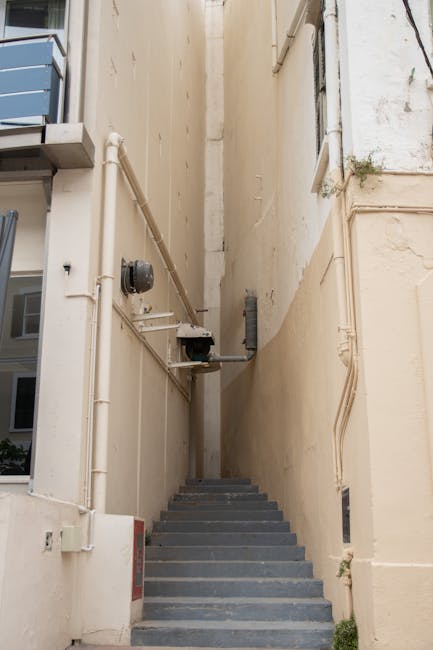
King Street W6 removal tips for narrow stair properties
Moving out of a flat or townhouse near King Street can be straightforward on paper, then suddenly awkward the moment you meet a steep stairwell, a tight turn, or a bannister that seems to have been designed as a joke. If you're searching for King Street W6 removal tips for narrow stair properties, you probably already know the feeling: one sofa, one landing, and a very real risk of scuffing walls, trapping fingers, or losing half the morning on a badly planned carry.
This guide is built for that exact problem. It explains how to plan a move in a narrow-stair property, what to pack first, which items cause the most trouble, and how to reduce stress without turning the day into a logistical drama. We'll also look at when it makes sense to use a smaller vehicle, a man and van service, storage, or a full house removal. Truth be told, a little planning goes a very long way here.
If you're comparing services, it can help to understand the wider options first, including local removals in Hammersmith W6, house removals for larger household moves, and more flexible support such as man and van support in Hammersmith. For the right kind of property, the details matter more than the headline service name.
Table of Contents
- Why King Street W6 removal tips for narrow stair properties Matters
- How King Street W6 removal tips for narrow stair properties Works
- Key Benefits and Practical Advantages
- Who This Is For and When It Makes Sense
- Step-by-Step Guidance
- Expert Tips for Better Results
- Common Mistakes to Avoid
- Tools, Resources and Recommendations
- Law, Compliance, Standards, or Best Practice
- Options, Methods, or Comparison Table
- Case Study or Real-World Example
- Practical Checklist
- Conclusion
- Frequently Asked Questions
Why King Street W6 removal tips for narrow stair properties Matters
Narrow stairs change everything. A move that would be routine in a ground-floor maisonette can become a careful choreography of angles, pauses, and a lot of "just hold it there for a second". In King Street and the surrounding W6 streets, many properties have tighter internal layouts, awkward landings, and staircases that don't forgive guesswork. If you ignore that, even a small move can become slow, expensive, and slightly bruising-emotionally and physically.
This is why planning for the staircase itself is just as important as planning for the van. A wide-open road outside means very little if the bed frame can't make the bend inside. The same goes for wardrobes, white goods, and bulky desks. The real challenge is not the distance. It's the route.
Narrow stair moves also tend to create secondary issues that people only notice too late:
- wall damage from corners, handles, or overconfident lifting
- delays caused by items that need partial disassembly on the landing
- neighbours being blocked by repeated trips up and down the stairs
- extra fatigue that increases the chance of accidents
- packing that looked fine in boxes but is far too heavy once carried upstairs
And let's face it, nobody wants the last memory of a home to be a scratched skirting board or a stuck sofa. A smarter approach means less stress, less noise, and a smoother handover. If your move involves a flat, terrace, or split-level layout, services such as removal services in Hammersmith W6 can be tailored around these access issues rather than pretending they don't exist.
How King Street W6 removal tips for narrow stair properties Works
In simple terms, the method is about reducing size, weight, and uncertainty before anything is carried. You are not just moving belongings; you are managing routes, angles, grip points, and timing. The best narrow-stair removals start long before moving day, usually with a walkthrough of the property and a decision about what can be dismantled, boxed, or taken out first.
A useful way to think about it is in three stages:
- Measure and assess. Check stair width, ceiling height, turn points, bannisters, door frames, and the largest items you plan to move.
- Reduce complexity. Strip beds, remove legs from tables, empty drawers, decant loose items into boxes, and avoid moving anything half-packed.
- Control the route. Decide which items go first, where they will be staged, and whether certain furniture should come down on its side, upright, or in pieces.
Small changes make a surprisingly big difference. Removing a door from hinges, for example, may buy you several extra centimetres at a pinch point. Likewise, moving boxes by category rather than by room can keep the stairwell from becoming a traffic jam. That sounds basic, but it's often where the day goes wrong.
For more awkward moves, especially where access is limited or parking is tight, a smaller vehicle can be the better call. You may find a service like a removal van in Hammersmith W6 more practical than sending a larger truck that never really fits the street or turnaround space.
Key Benefits and Practical Advantages
Doing this properly is not just about avoiding damage. It has a few real, practical upsides that people often overlook until they've experienced both versions of a move-the chaotic one and the organised one. The organised one is better. Much better.
| Approach | Main benefit | Typical risk if skipped |
|---|---|---|
| Measure access in advance | Fewer surprises on moving day | Items may not fit through the stairwell |
| Disassemble large furniture | Easier carrying and safer turns | Scrapes, trapped corners, damaged joints |
| Use smaller, better-planned loads | Smoother stair traffic and less congestion | Boxes pile up and slow everyone down |
| Stage items by priority | Faster unloading and less re-handling | Constant reshuffling, more fatigue |
There's also a mental benefit. A narrow-stair move can feel a bit claustrophobic, especially if the hallway is already tight and the weather is miserable outside. A good plan reduces that pressure. You know what is going first. You know what is staying behind. You know which items are the awkward ones. That clarity is worth a lot.
Another advantage is cost control. If items are packed sensibly and access is prepared properly, you may avoid unnecessary delays or repeat handling. In some cases, storage can be a smart short-term buffer. If you need to break the move into stages, storage in Hammersmith W6 can give you breathing space without cramming everything into the stairwell on one day.
Who This Is For and When It Makes Sense
This guidance is most useful if you live in, or are moving into, a property where the staircase is the main obstacle rather than the distance to the van. That includes upper-floor flats, older terraced homes, split-level maisonettes, and converted buildings where internal access was never designed for modern furniture sizes. If you've ever stood at the bottom of the stairs staring at a wardrobe and thinking, "well, that's awkward", this section is for you.
It's especially relevant for:
- tenants moving out of compact flats with shared stairwells
- homeowners dealing with large furniture and tight internal turns
- students or professionals with limited packing time and bulky electronics
- small business owners moving files, desks, or stock through residential-style access
- anyone who needs a more agile, less disruptive moving setup
It also makes sense when you simply don't want the hassle of managing the entire move yourself. A smaller, more flexible team can be a better fit than a full-scale operation if access is the problem. That is where man with a van support can be useful, especially for lighter loads, multi-trip moves, or partial relocations.
One realistic example: a couple moving out of a second-floor flat off King Street with a sofa, mattress, two bookcases, and enough boxes to make the hallway look like a cardboard canyon. On paper, not huge. In practice, the stair turn and narrow landing were the whole story. They didn't need brute force. They needed sequencing and the right vehicle size. Simple, but not obvious until you've seen it.
Step-by-Step Guidance
Below is a practical way to approach a narrow-stair move without overcomplicating it. You do not need a military operation. Just a sensible one.
1. Measure the difficult bits first
Before packing gets out of hand, measure stair width, landing depth, door frames, and the tallest or widest items. If you can, note where the turn is tightest. A quick tape measure session at the start can save a lot of embarrassment later.
2. Identify the awkward furniture
Most moves have one or two problem items. Usually it's a sofa with fixed arms, a bed base that is just a bit too long, or a wardrobe that looks slimmer than it is. Put those items at the top of your list. If something is likely to need dismantling, plan for it early rather than trying to improvise with a screwdriver while everyone waits.
3. Pack for carrying, not just for storage
A box that is technically packed can still be a terrible moving box. Heavy books in a large carton? That is asking for trouble on stairs. Use smaller boxes for dense items, and keep lighter items in larger boxes. Your back will thank you, and so will anyone carrying them down a narrow stairwell.
4. Clear the route completely
Hallways, boot racks, plant pots, loose umbrellas, and that chair you keep meaning to move all create risk. Clear the route from room to van, including the front door, stair edges, and any corner where someone might have to pause. A clean route is faster and calmer.
5. Plan the order of loading
Think about the van as a puzzle. Heavy items go in first, then medium items, then fragile or awkward ones. If the van is being used repeatedly between a few floors and the vehicle, keep the most frequently needed items together so nobody is climbing stairs unnecessarily. That bit sounds obvious, but on moving day people often forget it.
6. Use the right help for the load
If the property access is tight, a smaller team with the right experience can be more efficient than a larger one with the wrong approach. For some moves, a specialised local service is the smart choice. For others, a full house removal service in Hammersmith W6 is better because it can handle the packing, loading, and stair work as one coordinated job.
7. Leave a buffer for the unexpected
Something always happens. A shelf won't come off. A box needs re-taping. The mattress is larger than the stair landing would like. Build in time. If you don't need it, great. If you do, you won't be panicking at 5 pm with a sofa half-way round a landing. Been there, regrettably.
Expert Tips for Better Results
Here are the little things that tend to make a big difference. They don't sound dramatic, but they save time, sweat, and a fair bit of swearing under your breath.
- Use grip gloves. They help with control on smooth stair rails and cardboard surfaces.
- Protect the edges early. Corner guards or thick blankets are easier than repairing a chipped wall later.
- Take photos before dismantling. A quick phone picture of the back of a bed frame or shelving unit can stop confusion during reassembly.
- Keep screws and fittings in labelled bags. Tape them to the furniture piece they belong to, not to some mystery box.
- Move in pairs for larger items. A second person improves control on turns and stops one person from carrying all the strain.
- Use smaller box sizes than you think. Especially for books, kitchen items, and files.
One practical bit of advice that gets overlooked: decide who is talking and who is lifting. If everyone is giving instructions at once, stair moves get messy fast. One person calling the move is usually enough. Calm voice, clear pace, no shouting. It sounds almost too simple, but it works.
If your move is still being planned and you're not sure what level of support you actually need, it can help to speak with a local removal company in Hammersmith W6 that understands awkward access. A quick conversation often reveals whether you need a van, a team, packing help, or just a better route plan.
Common Mistakes to Avoid
The biggest mistakes on narrow stair properties are usually not dramatic. They're small, ordinary decisions made too quickly. Then they pile up.
- Overpacking boxes. Heavy boxes are miserable on stairs and easy to drop.
- Forgetting about turns. A piece may fit in theory but fail at the landing.
- Leaving furniture assembled. That one often costs more time than people expect.
- Not measuring the largest items. Guessing is not a strategy here.
- Blocking the hallway with packed boxes. This slows loading and raises the risk of damage.
- Choosing the wrong vehicle size. Too large can be awkward; too small means unnecessary trips.
- Ignoring tiredness. Fatigue leads to rushed lifts and clumsy turns. That's when accidents happen.
There's also a common emotional mistake: assuming a difficult staircase means the whole move is doomed. Not true. It just means the move needs more structure. Narrow access is a planning issue, not a disaster. Once people see that, the whole day tends to settle down.
Tools, Resources and Recommendations
You do not need a van full of specialist equipment, but a few tools make narrow-stair removals noticeably easier. The right kit helps protect both the property and the people carrying things.
| Tool or item | Why it helps | Best use |
|---|---|---|
| Furniture blankets | Reduce scuffs and absorb knocks | Large furniture, bannisters, door frames |
| Removal straps | Improve grip and weight distribution | Fridges, wardrobes, heavier boxes |
| Small and medium boxes | Keep loads manageable on stairs | Books, kitchenware, mixed household items |
| Labels and marker pens | Speed up sorting and unloading | All packed boxes and dismantled parts |
| Screwdriver set and Allen keys | Helps with quick dismantling and reassembly | Beds, tables, shelving, wardrobes |
Useful support services also matter. If your move is mixed with packing pressure, the right boxes and materials can change the whole experience. Packing and boxes in Hammersmith W6 can be a sensible next step if you want sturdier cartons and a more organised packing approach. And if your move is a partial one, or you simply need a lighter-touch service, man and van removals may fit better than a larger all-in-one arrangement.
One small recommendation from experience: keep a kettle, mugs, snacks, phone charger, and basic toiletries in a separate "first night" bag. After a day of carrying boxes up and down a narrow staircase, the simple stuff suddenly feels priceless. A cup of tea can restore morale more than you'd think.
Law, Compliance, Standards, or Best Practice
For a residential move, the main compliance concerns are usually practical and safety-based rather than highly technical. You want to protect people, property, and access arrangements. That means planning around safe lifting, avoiding blocked communal areas, and being careful not to damage shared parts of a building.
If you live in a block with shared hallways or stairwells, check any building rules about move times, lift use, floor protection, or parking arrangements. Those rules are often set by the building management or freeholder rather than by the removal team, so it's worth confirming them early. No one enjoys a last-minute argument in the lobby.
Best practice in narrow stair properties usually includes:
- keeping communal access clear
- protecting walls, corners, and bannisters where possible
- using sensible lifting techniques and team communication
- planning for parking and loading without blocking the road
- avoiding unsafe improvisation with overlarge items
If you're moving business equipment or office items from a residential-style property, the same logic applies. In some cases, office removals in Hammersmith W6 are needed because desks, screens, and storage units require a more structured approach than a standard household move.
It's also wise to be realistic about what should not be forced. If an item clearly will not fit safely, it may be better to dismantle it, store it, or replace it later rather than risking damage to the staircase or injury to the people carrying it. That's not overcautious. That's just sensible.
Options, Methods, or Comparison Table
There are a few different ways to handle a narrow-stair move. The right option depends on volume, access, budget, and how much help you want on the day. Here's a simple comparison.
| Method | Best for | Strengths | Limitations |
|---|---|---|---|
| DIY move | Small loads and very organised movers | Lower upfront cost, full control | Higher physical effort, more risk on stairs |
| Man and van | Light-to-medium moves with tight access | Flexible, practical, often quicker to arrange | May still need help with packing and disassembly |
| Full house removals | Larger household moves or complex furniture | More support, more coordination | May be more than you need for a small flat |
| Move with storage | Staged relocations or delayed completion dates | Reduces pressure, creates flexibility | Extra handling and planning required |
For many King Street W6 properties, the best answer is not the biggest service. It's the service that fits the staircase, the parking, and the amount of furniture you actually own. Sometimes that means a smaller vehicle. Sometimes it means a more comprehensive package. Sometimes it means using storage for a week or two while the rest of the move catches up.
Case Study or Real-World Example
Here's a realistic scenario. A family moving from an upper-floor flat near King Street had a large corner sofa, a mattress, two bookshelves, and enough kitchen boxes to make the hallway feel like a stockroom. The staircase had one tight turn and a shallow landing. At first glance, the sofa looked like the main issue.
It turned out the real bottleneck was the bookshelves. They were tall, awkward, and just a touch too broad once angled. Rather than forcing them, the team emptied them, removed the shelves, and carried the carcass separately after protecting the corners. The sofa still needed careful handling, but once the bookshelves were dealt with, the rest of the move became much smoother.
The practical lesson? The biggest-looking item is not always the biggest problem. Narrow stair properties reward the move that is most flexible, not the move that looks strongest on paper. That's why a pre-move assessment matters so much. A quick site look, even just ten minutes, can reveal more than a whole afternoon of guesswork.
In moves like this, a local support team that understands access issues can be worth its weight in tea and tape. If you want to speak with a team before deciding, you can start with more about the company or head straight to the contact page to ask about your property layout. That first conversation often clears up more than people expect.
Practical Checklist
Use this checklist the day before and again on the morning of the move. It keeps things simple, which is exactly what narrow stairs need.
- Measure the widest furniture items and the tightest stair turns
- Decide what must be dismantled before moving day
- Pack heavy items into small boxes
- Label boxes clearly by room and priority
- Clear the stairwell, hallway, and front entrance
- Protect walls, doors, and bannisters where possible
- Arrange parking and loading access in advance
- Separate fragile items and keep them easy to identify
- Prepare a first-night bag with essentials
- Check whether storage is needed for any overflow
- Confirm the moving order: largest items, then boxes, then fragile pieces
- Keep tools, tape, and spare labels close at hand
If you want the process to feel more manageable, the smartest move is usually to reduce what has to travel at once. That may mean booking local removals for the main load and using storage in Hammersmith W6 for the rest. Not glamorous, but very effective.
Conclusion
Narrow stair properties ask a bit more from a move, but they do not need to turn the day into chaos. If you measure carefully, pack sensibly, break down awkward furniture, and choose the right service for the size and shape of the job, most of the stress disappears before it starts. That's the real value of these King Street W6 removal tips for narrow stair properties: fewer surprises, fewer scrapes, and a far calmer handover.
For many people, the most important decision is simply choosing the right level of help. A small, agile move with a van and a few well-planned trips may be perfect. Others will need packing support, storage, or a more complete removal service. Either way, the staircase is the clue. Listen to the staircase, basically.
Get a free quote today and see how much you can save.
And if you're still in the planning stage, don't rush it. A little patience now can save a whole lot of faff later, and that's worth quite a bit when you're moving on a narrow stairwell in W6.
Frequently Asked Questions
What is the best way to move furniture down narrow stairs?
Usually the best method is to measure first, dismantle where possible, protect the route, and use two people for larger items. Furniture that fits on paper can still fail at a landing, so a careful test of the tightest turn is a smart first step.
Should I dismantle furniture before a move from a King Street W6 property?
Yes, if there is any doubt about stair clearance. Beds, wardrobes, tables, and shelving often move much more safely when taken apart. Even removing legs or doors can make a noticeable difference. Little changes matter here.
Is a man and van service enough for a narrow-stair move?
It can be, especially for smaller loads or partial moves. If you have a compact flat and only a few bulky items, a man and van service in Hammersmith W6 is often a sensible fit. For larger households, you may need more support.
How do I know if my sofa will fit through the stairwell?
Measure the sofa at its widest points, then measure the narrowest stair turn and landing clearance. Don't forget arms and feet. If the sofa is close to the limit, assume it may need partial dismantling or a different route. Guessing is rarely kind on moving day.
What should I pack first when moving from a narrow stair property?
Start with items you won't need before the move and pack them in manageable boxes. Books, ornaments, spare linens, and seasonal items are usually good early candidates. Keep heavy items in smaller boxes so the stairs do not become a wrestling match.
Can storage help with a difficult stair move?
Yes. Storage is useful if your completion date is uncertain, if only part of the furniture can move safely, or if you need to stage the move over more than one day. It can remove pressure and make tight-access moves much more controlled.
Do narrow stair properties usually need special equipment?
Not always, but furniture blankets, straps, gloves, and a good toolkit can make a big difference. For some items, the real "special equipment" is simply a patient, well-organised team and enough time to do it properly.
How much extra time should I allow for a move with narrow stairs?
There is no fixed rule, because every property is different. Still, it's sensible to allow more time than you would for a ground-floor or lift-access move. Tight turns, dismantling, and careful carrying all take longer than people expect.
What is the biggest mistake people make with stairwell removals?
The most common mistake is underestimating the furniture, the route, or both. People pack too much into large boxes, leave awkward items assembled, and assume the stairs will somehow cooperate. They usually don't. The stairs are honest like that.
Can I move large items myself if the staircase is narrow?
Sometimes, but only if the item is light enough and the route is safe. If you're carrying anything heavy, tall, or difficult to grip, get help. Safety matters more than saving a small amount of time or money.
How do I avoid damaging walls and bannisters during the move?
Use blankets or protective coverings where possible, keep the route clear, and move slowly around turns. One person should guide the item while the others carry it steadily. Rushing is usually what causes scuffs and knocks.
Where can I get help if I'm moving from a tight-access property in W6?
You can explore the local service pages for removal services in Hammersmith W6, house removals, or get in touch for a quote. The best option depends on how much you're moving and how tight the access is.